Monday, May 20, 2019

Retracing the Silk Road in Uzbekistan

In bygone day, the great silk way
Sowed temples and towers and gold.
Now brambles mass 'midst waving grass
On the once well-trodden road.

By the time of Amir Timur's death in 1405, his Timurid Empire had conquered its way out from his native Central Asia and present-day Uzbekistan to the coast of the Black Sea in the west and northern India in the east. Its multi-ethnic armies had rained blood upon the peoples of Persia and Mesopotamia and wiped out an estimated 5% of the planet's population in brutal campaigns of conquest. Timur's successes had been born of his capacity to successfully blend the mobility of the steppe nomads with Mongol tactics, Islamic law and Persian traditions. He is said to have possessed an unparalleled knack for military strategy and political intrigue. Although one of the most feared and ruthless conquerors of his time, he is regarded in Uzbekistan as the country's defining national hero. His ornate mausoleum, in which rests his black marble tomb, is one of the jewels of modern-day Samarkand, the old capital of Timur's sprawling empire.

According to legend, the inscription on his tombstone reads “When I rise from the dead, the world shall tremble." In June of 1941, a Soviet research expedition ignored the ominous warning and had the tomb opened. The inside allegedly revealed a second inscription, one even more dire than the first: “Whosoever disturbs my tomb will unleash an invader more terrible than I." Two days after the tomb was opened, Hitler launched Operation Barbarossa and invaded the Soviet Union with the largest invasion force of all time. Beginning to believe that the curse was real, Soviet leader Joseph Stalin ordered the remains of Timur reinterred with full Islamic rights in December of 1942. A little over a month later, the Nazis were defeated at the Battle of Stalingrad, the largest and bloodiest battle in history.

Thursday, September 27, 2018

Kyiv and Ukraine's Revolution of Dignity

With pockets lined and truncheons bare,
The Berkut sought to seize the Square.
But quickly sparks of protest flew
And flames of revolution grew.

September 10, 2013

My dearest Katyusha,

This is the first chance I've had to write to you, though there is not much news to tell. I'm staying with Uncle Fyodor and Aunt Katya on the far side of the Dnieper until I can find a job and start saving some money. From the balcony this morning I could look across the river and see to my left the morning light glinting off the Mother Motherland statue's sword and to my right the golden reflection of the domes of Pecherska Lavra. Growing up, I was always more afraid of the mummified priests in glass caskets lining the narrow tunnels beneath the lavra and the soulless eyes of painted icons than I was of the imposing Soviet murals or the collection of artillery from the Great Patriotic War. Now that I am older, I can discern a harmonious thread linking the two, one the product of our moral architecture, and the other a testament to the sacrifices our families made fighting the immoral blight of fascism.

Monday, May 14, 2018

Ruins in the Transcaucasian Unofficial States

Red flakes of paint peel off a fence in a field
Of changing thrones and shifting boundary stones that yield
The right to steer but not to interfere.________
__________________________It's evident
That the weapons they thought were heaven sent
Were from the neighbor trying to stay relevant.

https://commons.wikimedia.org/wiki/File:Caucasus-political_en.svg
The collapse of the Soviet Union in 1991 meant the revival of national ambitions for many of its former republics, but it also meant the revival of many age-old ethnic tensions. This was especially true in Transcaucasia, the sliver of lands south of the Caucasus Mountains on the border of Eastern Europe and Western Asia, which today hosts more unofficial sovereign states than any other part of the world. The series of wars that erupted in this region following the collapse of the Soviet Union was as vicious as it was predictable.

In the early 90s, Georgia lost control of two of its regions, Abkhazia and South Ossetia, which it maintains as parts of its territory to this day. For many Abkhazians and Ossetians, distinct ethnic groups with their own languages and cultural identities, the fall of the USSR was a golden opportunity to shrug off foreign claims and reassert their independence. Abkhazia, in particular, enjoyed the status of an independent Soviet republic until it was downgraded to an autonomous region within the Soviet Socialist Republic of Georgia in 1931, a decision which would lead to decades of resentment and protests. In July 1992, following the outbreak of war in South Ossetia and the subsequent freezing of the conflict, the Abkhazian government declared its independence from Georgia. The Georgian National Guard was immediately dispatched to restore control over Abkhazia, resulting in a bloody one-year conflict. The Abkhazian separatists received support from Chechen, Cossack and other North Caucasus and Russian militants. High levels of corruption in the Russian army led to arms being provided to both sides, but the bulk of Russian support went to the Abkhazians in a concerted effort to foil a unified Georgia. Russia continued to see the post-Soviet space as under its dominion, and having a foothold in Georgian territory would enable Russia to apply pressure to the Georgian government at will and maintain its authority in the region. And so another frozen conflict zone was not the concession but the goal.

Saturday, April 7, 2018

Living a Story in Himalayan Nepal

In rolls of fame the heroes shine,
Sprung from Tenzing's stalwart line,
Who daily death and cold contest
To guide the treks to Everest.

I've just flown into London and I'm about to catch my transfer to Chicago. Looking at my transfer ticket, I realize it's not a plane ticket but a bus ticket. Thunder Dome Bus Station is on the other side of the city, I have to take several taxis to get there. Each taxi driver quotes prices upwards of £300, and I have to tuck and roll out of the car doors to avoid getting ripped off. Finally I make it and grab the last seat on the triple-decker intercontinental minibus between a guy in superhero spandex and a vampire in a gorilla suit. What happened after that I can't recall because I slipped into another equally vivid dream. In reality, I was in Lobuche, a small Nepali settlement situated at 16,210ft (4,940 meters) above sea level and one day's hike from the base of Mt. Everest. Strange and lifelike dreams are common occurrences when sleeping at high altitudes on account of the low oxygen, and there's no more likely place to experience this phenomenon than Nepal, where just the average elevation is higher than the highest points of 141 of the world's countries. Here in the shadow of Everest, imposing peaks loom in every direction and from them plumes of wind-blown ice crystals unfurl like heraldic pennants proclaiming each summit's majesty. Beneath the rugged spires of rock and the treacherous ridges of ice, avalanches of cloud careen through jagged canyons before spilling out over the vast Khumbu Glacier. At night, the world's tallest mountains seem like humble hills when silhouetted against the vast canopy of blazing stars. A grave marker dedicated to an unsuccessful alpinist near the base of Everest seems to encapsulate the experience of ascending to this otherworldly realm with a simple exhortation - "live a story."

Tuesday, December 5, 2017

Ashgabat of White and Gold

Five-hundred domes and five-hundred more
In Ashgabat's walls I ween.
Never before such streets of gold
Or towers of white I've seen.

The streets are eerily empty. Freshly painted streets lamps in white and gold stretch in interminable ranks where they stand guard over deserted ten-lane roads. Ghostly bus stops open their silent, automatic doors to sterile, white rooms. Grand and ornate government buildings peer out over sidewalks bereft of life, human or animal. Empty alabaster apartment complexes rise up like white stalks of wheat. Colossal marble monuments preside over huge green parks while apartments in the desert city go without water. There are no storefronts or restaurants amidst the sea of public buildings, nor are there tourists, only 8,000 of whom visit this city every year. This is Ashgabat, the capital of Turkmenistan and an open-air museum to the extravagant impulses of one of the world's most bizarre dictatorships.

Monday, October 16, 2017

Cycling the Pamir Highway of Tajikistan

'Twixt northern range that proudly shrouds
Its snowy peaks in th' ambient clouds
And southern vale 'neath azure sky
The Pamir road's long windings lie.

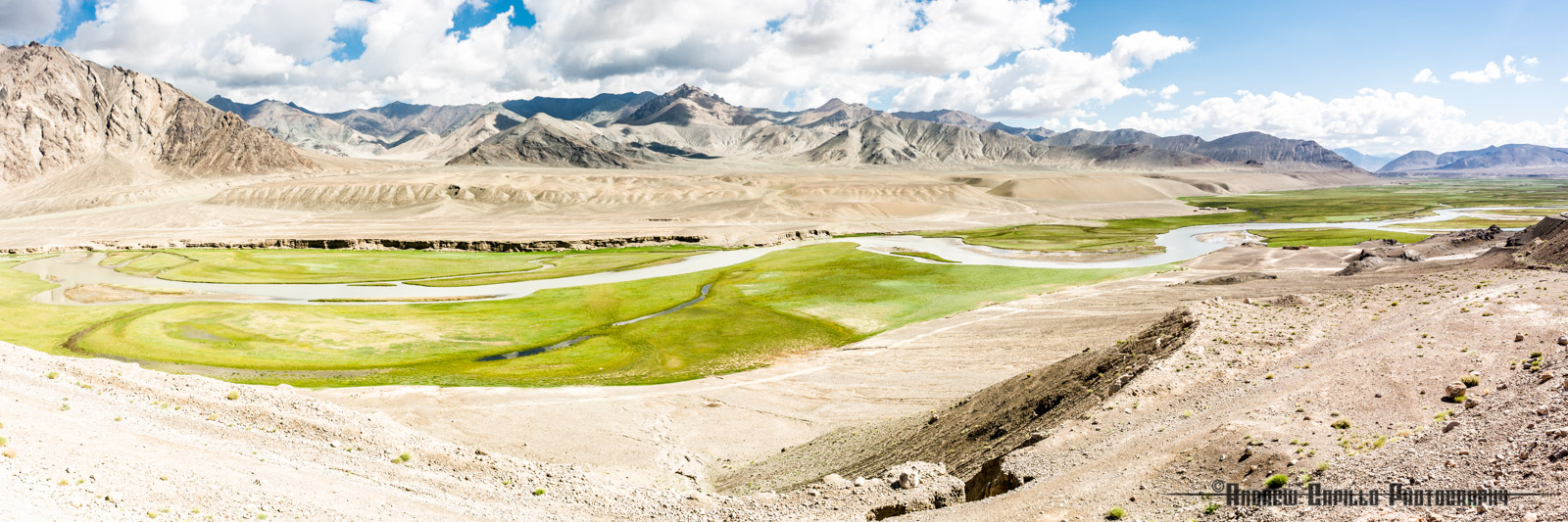
The Pamir Mountains, known historically as "The Roof of the World," stand at the crossroads of the tallest mountain ranges in the world. They stretch from Kyrgyzstan and the dramatic Tien Shan Mountains in the north to the Wakhan Corridor of Afghanistan in the south, where they meet the Hindu Kush range. To the east, they extend across the Chinese border and toward the Karakoram, Kunlun and Himalayan Mountains, which frame the Tibetan Plateau. The lion's share of the Pamir range, however, resides in Tajikistan's northeast Gorno-Badakhshan Autonomous Region.

This isolated region boasts a natural diversity and beauty that are oblivious to the ascendancy of humankind in other parts of the globe. The high-altitude northern wastes occupy a harsh and barren plateau surrounded by indomitable peaks. The soil is fine as sand, but with a salty crust that only a few weeds can penetrate. Scattered pools of water can be found north of the 3,960-meter Lake Karakul, the largest body of water in the region, but all of them are poisoned with salt. Descending toward the south, the peaks begin to shed their white crowns, but the inhospitable desolation of the land persists in the steep mesas and vast deserts where clouds abjure the sky. The route west is an exhalation of rugged trees and twisting streams that gradually give way to swaths of green and lush river valleys as you descend from the unforgiving and oxygen-starved heights.

Wednesday, August 16, 2017

Kok-Boru, the National Horse Game of Kyrgyzstan

Warning: graphic images of animal decapitation follow at the end of the post. Please don't scroll to the bottom if you're squeamish about blood.

Cattle die, and kinsmen die,
And so we will die too.
But a champion's name will never die
If renowned in kok-boru.

Kok-boru, Kyrgyz for "blue wolf," is the name of the national horse game of Kyrgyzstan. The name and the game can be traced back to a time when nomadic shepherds would play friendly games on horseback to hone their skills against the wolves that threatened their flocks. These shepherds depended on their horses for their survival, and so the importance of horsemanship in nomadic cultures cannot be overstated. Accordingly, the sport retains a position of importance and is known across Central Asia, though sometimes by different titles. Ulak-tartysh, for example, or kokpar in Kazakhstan and buzkashi in Afghanistan. Although still traditionally played in villages throughout the country, decades of Soviet urbanization have resulted in the migration of major tournaments to large cities like Bishkek, where a kok-boru field resides year round in the city's hippodrome beneath the snowy gaze of the Ala-Too Mountains.

Saturday, May 27, 2017

Stepping Back in Time at Lake Son Kul, Kyrgyzstan

The green earth sought in earliest days
An altar to the sun to the raise
And clad a shore in verdant guise,
Where horses scud and mountains rise.

Deep in the remote mountainous Naryn region of Kyrgyzstan at 3,016 meters above sea level lies Lake Son Kul. The people here at Son Kul live much as their ancestors did. For nine months out of the year, they live in the valleys and lowlands in permanents settlements. There they are spared the harsh face of winter in the mountain heights and can raise their livestock near glacier-fed rivers. Come the summer, they herd their animals to the jailoos, the high mountain pastures open to the sun and ideal for grazing. Stretching between the snow-capped mountains to the north and the southern slash of cloud-studded peaks in the south, it was easy to see why the land around the clear, glassy mirror that is Lake Son Kul is considered the crowning jewel of jailoos. When each day the dawn slices open the eastern horizon and the tongues of light lap up the edge of the earth to pour into the basin, pile up against the yurts and crash into the mountains, they find no infrastructure or buildings to illuminate. This is a land that is untouched, undiscovered and completely undeveloped.

Tuesday, May 9, 2017

Highlights of Beijing, China

The greatest of walls, mortals name
A structure of immortal fame.
Its towers rising strong and high
Proud kings bade storm and foe defy.

photo from http://news.ifeng.com
When I arrived in Beijing in the spring, the city was just beginning to undergo its annual cottonwood air blitz. Each year after the snows melt, a different kind of white sheet coats the city. The snowy, fluffy catkins that cover the roads cause all sorts of problems, including traffic delays and allergic reactions. The culprits are female poplar and willow trees planted in their millions beginning in the 1960s because they are hardy trees that grow quickly. Now the government has to take extreme measure like culling the branches and employing chemicals in order to cut down on the ubiquitous pollen fuzzballs that rain down every spring. Luckily, where I was staying in the city, there were no such trees planted en masse. Instead, nearby Qianmen Street offered a vista of buildings reconstructed in the iconic style of the Qing Dynasty. Although there are two sets of rails stretching the length of the kilometer-long street, the only trams that make the trip nowadays cater to tourists.

Tuesday, April 11, 2017

Sakura Blossoms in Hiroshima, Japan

Now I am become Death, the destroyer of worlds
And histories that iron out the bites and curls
To detract contention from controversy and eliminate
All the details except for the place and the date.

The sun blazed down like the eye of a wrathful god my first morning in Hiroshima. This seemed an appropriate backdrop as I walked by the Atomic Bomb Dome, the sight where ungodly nuclear fury was unleashed on an unsuspecting population. When I'd come to Japan a little over a year ago, I’d expected a certain amount of animosity towards Americans for the wholesale destruction of most of Japan's major cities during the Second World War and the utter devastation of Hiroshima and Nagasaki, which is still widely taught in US as having been the undisputed cause of the Japanese surrender (rarely is any attention spared for the controversial argument that it was the USSR's concurrent decision to enter the war against Japan that had the greatest effect on the Japanese decision to surrender). However, the economic prosperity that the US helped to bring about after the war and the shift of public opinion among Japanese people with regard to their country's own shameful actions during the war seem to have swept much of that resentment under the rug. It seemed to me that this area embodied some of this ambivalence; right across the river from the Atomic Bomb Dome and all the suffering it represents was a picturesque passageway of sakura trees, which had coated the walkway with a patina of white petals. And yet, both the ruined dome and the transient blossoming of these trees are reminders of life's fragility.

Sunday, March 19, 2017

Chernobyl and Western Ukraine

'Midst concrete ruins rumored roam
Great beasts that call Chernobyl home.
Nature cares naught what lord presides;
Man's works may fade, but life abides.

From Lviv, a city rich in the arts and atmosphere, to Kamyanets-Podilsky and its fortress that has stood witness to 600 years of changing allegiances and tumultuous history, to the majestic rolling hills of the Carpathian Mountains, Western Ukraine is a land steeped in beauty and entwined with the legacies of half a dozen European empires and kingdoms. Today, this part of Ukraine has a distinctive character that distinguishes it from the other parts of the country, which trace their history back to the Russian Empire. Here Ukrainian is the dominant language, instead of Russian, which is widely used in the eastern and southern regions of the country, and political allegiances tend to lie more with the European countries to the west than with Russia to the east. For most people who come here, this area is a detour on the way to something grander, but those who hold it as their destination are truly privileged. These stretches of countryside that straddle the Carpathian Mountains contain the true soul of the Ukrainian people and offer the observant visitor melodious landscapes, magnificent architecture, untouched castle ruins, the embrace of warm hospitality and a wealth of culture and tradition.